CIRQL-DC Sustainable data centres
Requirements for siting, construction and operation
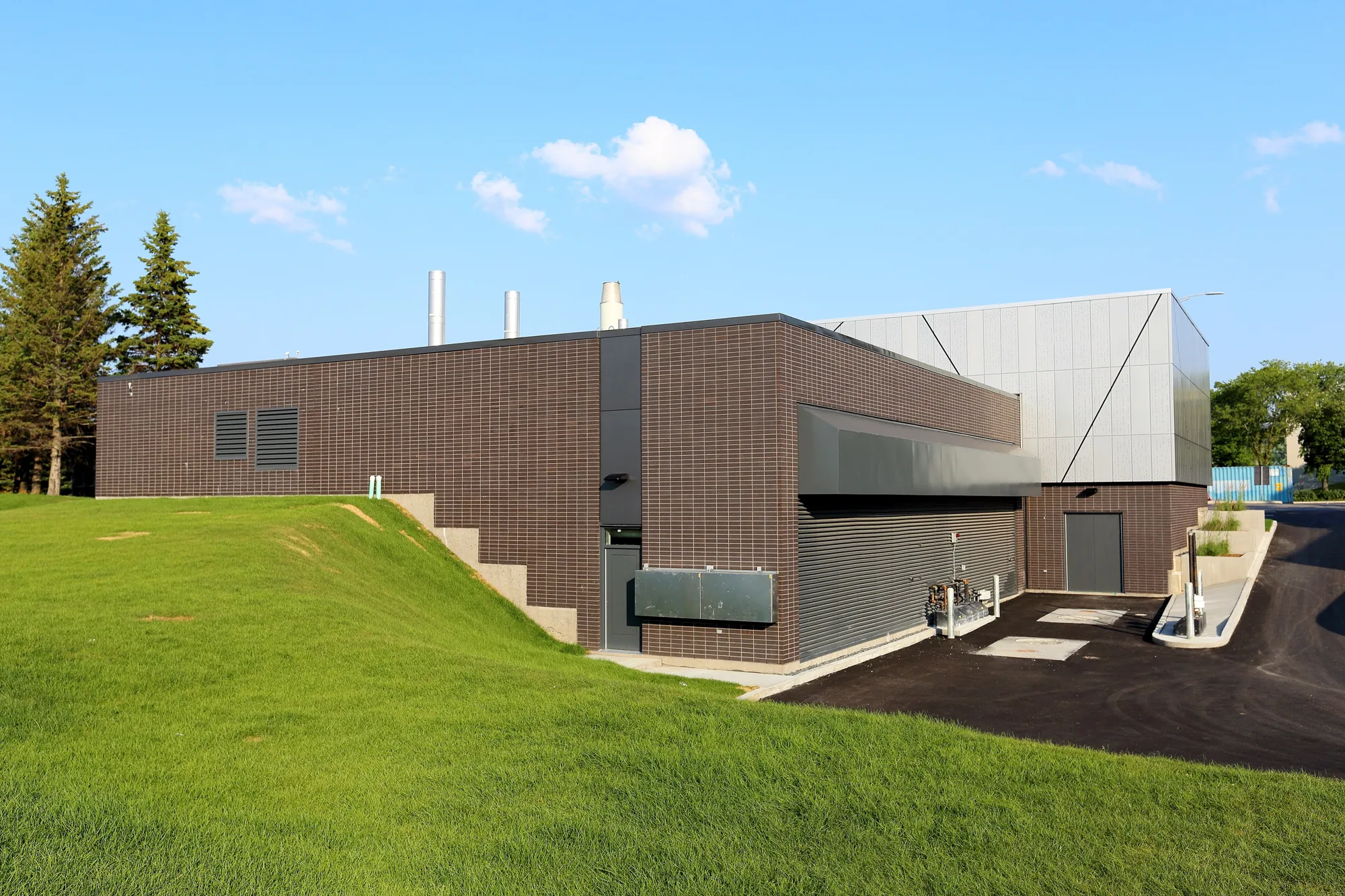
This document specifies requirements relating to the impact of a data centre on its surroundings, in particular with regard to site selection in relation to residential development, water abstraction, noise, including low-frequency noise, back-up power supply and fuel storage, waste heat utilization and disclosure of operational data.
The requirements supplement the scope of the data centre assessment in the CIRQL programme (criteria DC1–DC3). This document provides for the publication of operational data in a public facility sheet (Clause 6), prepared on the basis of the same data that the operator submits to the European database on data centres.
1 Scope
1.1 This document specifies requirements and recommendations for a data centre assessed in the CIRQL programme in three phases:
design — requirements designated by the letter P;
construction and acceptance — requirements designated by the letter B;
operation, assessed annually — requirements designated by the letter E.
1.2 This document applies to data centres with an installed information technology power demand (3.2) of at least 100 kW.
1.3 This document applies to new facilities, facilities undergoing extension and facilities in operation. In an existing facility, phase P requirements are assessed on the basis of an inventory survey and as-built documentation. A phase P requirement may be excluded from the assessment of an existing facility, with justification, only where it concerns design decisions that cannot be changed in an existing facility, subject to 4.3.1, 5.1.1 and 5.1.2.
1.4 This document does not cover:
cybersecurity and information security;
assessment of IT service management;
assessment of conformity with the EU taxonomy, with financing conditions or with public procurement requirements.
1.5 The result of an assessment according to this document has no official (administrative) status. It does not replace a decision on environmental conditions, a building permit, an occupancy permit, emission permits or measurements required by legal provisions.
1.6 The following verbal forms are used in this document:
- "shall" — requirement;
- "shall not" — prohibition;
- "should" — recommendation;
- "may" — permitted deviation or choice.
Present-tense statements (e.g. "is assessed", "is determined", "applies", "is deemed") that specify the scope of application of the requirements and the activities of the assessment body (3.30) are binding on that body.
4.1 Size classes
4.1.1 The facility class is determined during facility qualification on the basis of the installed IT power demand (3.2) in the final stage of extension, taking the higher of the values specified in the design documentation and in the connection conditions.
Table 1 — Facility size classes
| Class | Installed IT power demand (PD_IT) |
|---|---|
| S | below 1 MW |
| M | from 1 MW to 10 MW |
| L | above 10 MW |
4.1.2 A facility extended in stages is assessed in the class corresponding to the final stage. The current and final installed IT power demand shall be given in the public facility sheet.
4.2 Siting modifiers
4.2.1 Siting modifiers are determined during facility qualification on the basis of the documents listed in Table 2. The types of residential development areas are determined according to Table 1 of the Annex to the regulation on permissible noise levels in the environment. Several modifiers may be assigned to a facility simultaneously. The assigned modifiers, together with the basis for their determination, are entered in the qualification report; they shall be given in the public facility sheet in accordance with 6.2 a).
Table 2 — Siting modifiers
| Modifier | Assignment condition | Documents forming the basis for determination |
|---|---|---|
| H — proximity to residential development | residential development (3.10) is located in the neighbourhood zone (3.11) | base map or map for design purposes with the neighbourhood zone marked; extract and map excerpt from the local spatial development plan or zoning decisions for areas located in the zone; list of residential buildings from the land and building register |
| W — water scarcity area | at least one of the following conditions is met: a) the facility site lies in an area of severe or extreme drought hazard on the combined drought hazard map (map 8) of the Drought Effects Counteraction Plan; b) the facility site lies in an area indicated on map 21 of that plan as recommended for action No 25 (review of permits); c) the water supply and sewerage company or the water management authority has indicated restrictions on water availability in the technical connection conditions, in approvals or in the water-law permit | maps of the Drought Effects Counteraction Plan or, if an updated plan is in force on the qualification date, maps of that plan; technical conditions for connection to the water supply network; water-law permit |
| G — restricted connection to the electricity grid | the connection conditions provide for phasing of power, limitation of the connection capacity or conditional connection, or the system operator has refused connection due to lack of technical conditions | connection conditions or connection agreement issued by the distribution or transmission system operator; correspondence with the system operator |
| DH — district heating network available | a district heating network is located within 2 km of the facility site boundary | information from the heat supply company; assumptions for the municipal plan for the supply of heat, electricity and gaseous fuels; utility network map |
| R — agricultural or undeveloped land | the facility site includes agricultural land according to the land and building register, is previously undeveloped or is located in a rural area | extract from the land and building register; orthophotomap from before the start of the investment; extract from the local spatial development plan |
4.2.2 In a facility to which modifier H has not been assigned, the requirements apply according to columns S, M and L of Table 3 (5.4).
4.3 Requirements with modifier H
4.3.1 If modifier H has been assigned to a facility, the following are non-excludable requirements (3.19) in all classes:
5.1.1 Site and alternatives analysis (P1);
5.1.2 Information for neighbours before submission of the application (P2);
5.1.5 Acoustic prediction (P5) and 5.2.2 Acoustic acceptance testing after commissioning (B2);
5.1.6 Back-up power supply and fuel store (P6);
5.3.6 Operation of generating sets (E6) and 5.3.7 Verification measurement of noise (E7).
4.3.2 If modifier H has been assigned to a facility, requirement 5.2.1 (B1) also applies in all classes and requirement 5.3.9 (E9) applies in class M.
5.4 Summary of application of requirements
Table 3 — Application of requirements by class and siting modifier
| Subclause | Requirement | S | M | L | Non-excludable with H | Applied with H | Other modifiers |
|---|---|---|---|---|---|---|---|
| 5.1.1 | P1 | ● | ● | ● | yes | — | H, R: alternative on developed land |
| 5.1.2 | P2 | ○ | ● | ● | yes | — | — |
| 5.1.3 | P3 | ● | ● | ● | — | — | W: limit value |
| 5.1.4 | P4 | ● | ● | ● | — | — | — |
| 5.1.5 | P5 | ● | ● | ● | yes | — | — |
| 5.1.6 | P6 | ● | ● | ● | yes | — | — |
| 5.1.7 | P7 | ● with total rated energy input > 1 MW, otherwise ○ | ● | ● | — | — | DH: substation and offer (●) |
| 5.1.8 | P8 | ○ | ● | ● | — | — | G: ● in all classes |
| 5.1.9 | P9 | ● | ● | ● | — | — | R: extended requirement (●) |
| 5.1.10 | P10 | ● | ● | ● | — | — | — |
| 5.1.11 | P11 | ● | ● | ● | — | — | — |
| 5.2.1 | B1 | ○ | ● | ● | — | ● in class S | — |
| 5.2.2 | B2 | ● | ● | ● | yes | — | — |
| 5.2.3 | B3 | ● | ● | ● | — | — | — |
| 5.3.1 | E1 | ● | ● | ● | — | — | — |
| 5.3.2 | E2 | ● | ● | ● | — | — | — |
| 5.3.3 | E3 | ● | ● | ● | — | — | W: limit value |
| 5.3.4 | E4 | ○ | ● | ● | — | — | DH: ● in all classes, limit value in classes M and L |
| 5.3.5 | E5 | ● | ● | ● | — | — | — |
| 5.3.6 | E6 | ● | ● | ● | yes | — | — |
| 5.3.7 | E7 | ○ | ● | ● | yes | — | — |
| 5.3.8 | E8 | ○ | ● | ● | — | — | — |
| 5.3.9 | E9 | ○ | ○ | ● | — | ● in class M | — |
| 5.3.10 | E10 | ● | ● | ● | — | — | — |
Key: ● — requirement; ○ — recommendation; "yes" — non-excludable requirement in all classes (4.3.1); "Applied with H" — requirement applied with modifier H in the class indicated in the cell, in which it is a recommendation without the modifier (4.3.2).
6 Public facility sheet
6.1 The public facility sheet shall be published on a publicly accessible website, in Polish, in a form readable without registration. The sheet may be published on the same website on which the operator makes the Union label available. The sheet shall not be given a form imitating the Union label.
6.2 The sheet shall state at least:
the name and address of the facility, the name of the operator, the date of commissioning, the facility class (S, M, L) and the assigned siting modifiers with the basis for their determination;
the current and final installed IT power demand and the connection capacity;
PUE, WUE (with the definition according to 3.5), ERF and REF for the reporting year, with the measurement boundary, measurement category and reference period, as well as the PUE and WUE classes according to Annex I to Delegated Regulation C(2026) 3472 and a reference to the Union label;
the consumption of total water, freshwater and potable water (in m³/year; average and maximum in m³/d), the water source and the days on which the peak value was exceeded according to 5.3.3, together with their cause;
the quantity and temperature of heat supplied to the recipient and the name of the recipient, if the recipient has consented;
the share of renewable energy broken down according to 5.3.5;
the number and power of generating sets, the type of fuel, the quantity of stored fuel and the generator operating hours according to 5.3.6;
the results of the last noise measurement at the noise assessment point (daytime and night-time, L_Ceq − L_Aeq, tonal components, low-frequency noise in the room or the result of the calculation according to 5.2.2) together with the date of measurement;
the number of complaints in the reporting year, their subject matter and the method of handling them;
the types of refrigerants and their GWP;
the contact point details;
an indication of the third party that verified the sheet, and the date and scope of the verification.
6.3 The data in the sheet shall be given in accordance with the data submitted to the European database on data centres. Any differences shall be explained in the sheet.
6.4 Information constituting a trade secret may be excluded from the sheet only with an indication of the type of information excluded and a justification. The exclusion does not apply to the data listed in 6.2 c), d), g) and h).
6.5 The sheet shall be published and verified annually. The verification shall compare the data in the sheet with the source data (meter readings, generator operating log, measurement reports, complaints register) on a sample determined in accordance with 7.8 d).
6.6 The public facility sheet is not a certificate. The CIRQL level shall not be stated in it.
7 Assessment and decision
7.3 Assessment report. For each requirement, the assessment report states: the status (fulfilled, not fulfilled, not applicable — with justification, result reported without a conformity decision in accordance with 7.8 c)), the source of evidence and the deficiencies to be remedied. Non-excludable requirements and unfulfilled recommendations are listed separately in the report.
7.4 Decision rule. The result of the assessment is decided by a person or committee that did not take part in the assessment. A positive result requires fulfilment of all requirements that apply to the facility according to Table 3. Non-fulfilment of any of them precludes a positive result. Non-fulfilment of a recommendation does not affect the result. A requirement that is not non-excludable is assessed as "not applicable" only in the cases specified in 1.3 and in the text of the requirement, with justification in the assessment report. Non-excludable requirements (4.3.1) are not assessed as "not applicable", are not excluded from the assessment and are not replaced by evidence other than that provided for in their text. No scoring or result levels are applied.
7.8 Transitional provisions.
Until the methodology is approved, no CIRQL certificates are issued. This period lasts until the date of announcement of the approved CIRQL methodology on the programme website.
The provisions of this document referring to Delegated Regulation C(2026) 3472, to the wording of Delegated Regulation (EU) 2024/1364 as amended by that Regulation, to the Union rating scheme for data centres, to the Union label and to the PUE and WUE classes apply from the date of entry into force of Delegated Regulation C(2026) 3472. Until that date they are not applied in the assessment.
Until the date of announcement on the programme website of the approved CIRQL methodology establishing the method for measuring and assessing tonal components and the method for determining the noise level in a room on the basis of a measurement at the façade, the limit values relating to tonal components, low-frequency noise in rooms and infrasound (5.1.5, 5.2.2, 5.3.7) do not determine the result of the assessment. The result of the prediction, measurement or calculation is given in the assessment report and shall be given in the public facility sheet as a measured or calculated value, without a decision on fulfilment of the requirement (result reported without a conformity decision), together with the limit values given in 5.1.5. During this period, fulfilment of requirements 5.1.5, 5.2.2 and 5.3.7 is determined by the performance of the prediction or measurement within the scope specified in those requirements and by meeting the limit values for the A-weighted equivalent continuous sound level.
The competence requirements for assessors (3.26), the method of determining the sample in the verification of the public facility sheet (6.5), the surveillance rules (7.5) and the rules for handling complaints and appeals (7.6) are specified in the approved CIRQL methodology announced on the programme website. Until the date of its announcement, the verification of the public facility sheet is carried out on the full set of source data for the given year, the assessment is not assigned to a person who does not meet the condition specified in 7.2, and complaints and appeals are handled by a person who did not take part in the assessment, within 30 days of their receipt.
Annex A (informative) Relationship between requirements and legal provisions and standards
Table A.1 — Relationship between requirements and legal provisions and standards
| Subject | Legal provision or standard | Provision of this document |
|---|---|---|
| Scope of application by power | Delegated Regulation (EU) 2024/1364, Annex IV — lowest size class 100–500 kW, highest above 10 MW; Delegated Regulation C(2026) 3472 — voluntary participation of facilities below 500 kW in the Union rating scheme for data centres (Article 3(5) of Regulation 2024/1364 as amended) | 1.2; 4.1 |
| Power thresholds | Directive (EU) 2023/1791: Article 12(1) — obligation to make the information in Annex VII publicly available annually for facilities with an installed IT power demand of at least 500 kW, with protection of confidential information; Article 12(4) — encouragement to apply the code of conduct at a power of at least 1 MW; Article 26(6) — total rated energy input above 1 MW | 3.3; 4.1; 5.1.7; 5.3.1 |
| Siting in relation to residential development | Regulation of the Council of Ministers of 10 September 2019 on projects likely to have a significant impact on the environment (Dz.U. 2019 item 1839, as amended), § 1(2)(2) and § 3(1)(57) — service development: 2 ha or 4 ha in areas covered by a local spatial development plan, 0.5 ha or 2 ha outside them, lower thresholds in areas of nature protection forms and in their buffer zones; Act of 3 October 2008 on the provision of information on the environment and its protection, public participation in environmental protection and environmental impact assessments (Dz.U. 2026 item 670, as amended), Article 66(1)(5) — analysis of alternatives in the environmental impact assessment report | 3.10; 3.11; 4.2 (H, R); 5.1.1 |
| Public participation | Provisions of the Act referred to above on public participation — in proceedings in which it is provided for | 5.1.2; 6 |
| Water | Delegated Regulation (EU) 2024/1364, Annex II, point 1(h)–(i) and Annex III(b); PN-EN 50600-4-9; Act of 20 July 2017 — Water Law (Dz.U. 2026 item 1335), Articles 183–185 (drought effects counteraction plan) and Article 403 (quantity of abstracted water in the water-law permit); Drought Effects Counteraction Plan (Dz.U. 2021 item 1615), maps 8 and 21 | 3.5; 4.2 (W); 5.1.3; 5.3.3 |
| WUE classes | Delegated Regulation C(2026) 3472, Annex I, Table 2 (WUE according to 3.5, Note 2 to entry): A: WUE ≤ 0.1; B: 0.1 < WUE ≤ 0.2; C: 0.2 < WUE ≤ 0.4; D: 0.4 < WUE ≤ 0.6; E: 0.6 < WUE ≤ 0.8; F: 0.8 < WUE ≤ 1.0; G: WUE > 1.0 | 5.0.3; 5.1.3; 6.2 c) |
| PUE | PN-EN 50600-4-2; Delegated Regulation (EU) 2024/1364, Annex III(a) | 3.4; 5.1.4; 5.3.2 |
| PUE classes | Delegated Regulation C(2026) 3472, Annex I, Table 1: A: PUE ≤ 1.15; B: 1.15 < PUE ≤ 1.25; C: 1.25 < PUE ≤ 1.35; D: 1.35 < PUE ≤ 1.5; E: 1.5 < PUE ≤ 1.7; F: 1.7 < PUE ≤ 1.9; G: PUE > 1.9 | 5.1.4; 5.3.2; 6.2 c) |
| Cooling degree days | Delegated Regulation (EU) 2024/1364, Annex II, point 1(n), as amended by Delegated Regulation C(2026) 3472 — number of cooling degree days for the facility location in the last calendar year according to the Eurostat and Joint Research Centre method, entered automatically by the European database on data centres | 5.3.2 b) |
| Environmental noise | Regulation of the Minister of the Environment of 14 June 2007 on permissible noise levels in the environment (Dz.U. 2014 item 112), Table 1, column "other facilities and activities that are a source of noise": single-family housing — 50 dB (daytime) and 40 dB (night-time); multi-family housing and collective residence, farmstead development, recreational areas and residential and service areas — 55 dB and 45 dB; A-weighted values | 3.10; 3.12; 3.16; 4.2.1; 5.1.5; 5.2.2; 5.3.7 |
| Emissions from generating sets | Directive (EU) 2015/2193, Annex II — 190 mg/Nm³ nitrogen oxides (15 % oxygen) for new diesel engines; Regulation of the Minister of Climate of 24 September 2020 on emission standards… (Dz.U. 2020 item 1860), § 10–12 and Annex No 5 — exemptions and less stringent standards depending on the type, age, power and mode of operation of the source (§ 10(3) and § 11 — peak load sources; § 12 — gas turbines and gas engines operating in emergency situations for less than 500 hours per year); Regulation (EU) 2016/1628, Article 2(2)(d) — exclusion of stationary machinery | 5.1.6; 5.3.6 |
| Waste heat | Directive (EU) 2023/1791, Article 26(6) and (7)(d) (newly planned or substantially refurbished facilities) and Annex XI; PN-EN 50600-4-6; Delegated Regulation (EU) 2024/1364, Article 2(16) as amended and Annex II, point 1(j)–(k); Act of 20 February 2015 on renewable energy sources (Dz.U. 2026 item 68), Article 116 — purchase of waste heat by certain undertakings within the limits of the demand of network customers | 3.6; 4.2 (DH); 5.1.7; 5.3.4 |
| Grid connection | Delegated Regulation (EU) 2024/1364, Annex II, point 1(f) (grid-supporting functions); connection conditions of the system operator | 4.2 (G); 5.1.8 |
| Renewable energy | PN-EN 50600-4-3; Delegated Regulation (EU) 2024/1364, Annex II and Annex III(d) | 3.7; 5.3.5 |
| Refrigerants | Delegated Regulation (EU) 2021/2139, Annex I, Section 8.1, substantial contribution to climate change mitigation criteria, point 3; Delegated Regulation (EU) 2024/1364, Annex II (reporting of refrigerant type) | 5.1.11; 6.2 j) |
| Energy efficiency practices | Directive (EU) 2023/1791, Article 12(4); Delegated Regulation (EU) 2021/2139, Annex I, Section 8.1, points 1–2; European Code of Conduct on Data Centre Energy Efficiency; CLC/TR 50600-99-1:2021, Clause 5 | 5.3.8 |
| IT equipment | Delegated Regulation (EU) 2021/2139, Annex I, Section 8.1 — "do no significant harm" criteria relating to the circular economy | 5.3.10 |
| Disclosure of operational data | Directive (EU) 2023/1791, Article 12(1) and (3) and Annex VII; Delegated Regulation (EU) 2024/1364, Annexes II–III; Delegated Regulation C(2026) 3472, Articles 3 and 4 and Annex II — Union label generated by 15 August 2027 and annually thereafter, publicly available in the European database; Article 4(1) and (2) — place of display of the label and prohibition of markings imitating it; Article 7 — entry into force on the twentieth day following publication in the Official Journal of the European Union | 5.0.3; 5.3.1; 6; 7.8 b) |
Bibliography
- [1] Directive (EU) 2023/1791 of the European Parliament and of the Council of 13 September 2023 on energy efficiency and amending Regulation (EU) 2023/955 (recast) (OJ L 231, 20.9.2023) — https://eur-lex.europa.eu/eli/dir/2023/1791/oj
- [2] Commission Delegated Regulation (EU) 2024/1364 of 14 March 2024 on the first phase of the establishment of a common Union rating scheme for data centres — https://eur-lex.europa.eu/eli/reg_del/2024/1364/oj
- [3] Commission Delegated Regulation C(2026) 3472 of 21 September 2026 supplementing Directive (EU) 2023/1791 and amending Delegated Regulation (EU) 2024/1364; Council document 13444/26 — https://data.consilium.europa.eu/doc/document/ST-13444-2026-INIT/en/pdf; annexes — https://data.consilium.europa.eu/doc/document/ST-13444-2026-ADD-1/en/pdf
- [4] Directive (EU) 2015/2193 of the European Parliament and of the Council of 25 November 2015 on the limitation of emissions of certain pollutants into the air from medium combustion plants (OJ L 313, 28.11.2015) — https://eur-lex.europa.eu/eli/dir/2015/2193/oj
- [5] Commission Delegated Regulation (EU) 2021/2139 of 4 June 2021 supplementing Regulation (EU) 2020/852 of the European Parliament and of the Council by establishing the technical screening criteria for determining the conditions under which an economic activity qualifies as contributing substantially to climate change mitigation or climate change adaptation and for determining whether that economic activity causes no significant harm to any of the other environmental objectives, consolidated text as of 1 January 2026 — https://eur-lex.europa.eu/legal-content/EN/TXT/?uri=CELEX:02021R2139-20260101
- [6] Regulation (EU) 2016/1628 of the European Parliament and of the Council on requirements relating to gaseous and particulate pollutant emission limits and type-approval for internal combustion engines for non-road mobile machinery — https://eur-lex.europa.eu/eli/reg/2016/1628/oj
- [7] Regulation of the Minister of the Environment of 14 June 2007 on permissible noise levels in the environment (Dz.U. 2014 item 112) — https://eli.gov.pl/eli/DU/2014/112/ogl
- [8] Regulation of the Minister of Climate of 24 September 2020 on emission standards for certain types of installations, fuel combustion sources and waste incineration or co-incineration plants (Dz.U. 2020 item 1860) — https://api.sejm.gov.pl/eli/acts/DU/2020/1860/text.html
- [9] Act of 3 October 2008 on the provision of information on the environment and its protection, public participation in environmental protection and environmental impact assessments (Dz.U. 2026 item 670, as amended) — https://eli.gov.pl/eli/DU/2026/670/ogl
- [10] Regulation of the Council of Ministers of 10 September 2019 on projects likely to have a significant impact on the environment (Dz.U. 2019 item 1839, as amended) — https://eli.gov.pl/eli/DU/2019/1839/ogl
- [11] Act of 20 July 2017 — Water Law (Dz.U. 2026 item 1335) — https://eli.gov.pl/eli/DU/2026/1335/ogl
- [12] Regulation of the Minister of Infrastructure of 15 July 2021 on the adoption of the Drought Effects Counteraction Plan (Dz.U. 2021 item 1615) — https://eli.gov.pl/eli/DU/2021/1615/ogl
- [13] Act of 20 February 2015 on renewable energy sources (Dz.U. 2026 item 68), Article 116 — https://eli.gov.pl/api/acts/DU/2026/68/text/U/D20260068Lj.pdf
- [14] Technische Anleitung zum Schutz gegen Lärm (TA Lärm) of 26 August 1998, amended 1 June 2017, point 7.3 — https://www.verwaltungsvorschriften-im-internet.de/bsvwvbund_26081998_IG19980826.htm
- [15] Miljøstyrelsen, Orientering nr. 9/1997 "Lavfrekvent støj, infralyd og vibrationer i eksternt miljø" — https://mst.dk/media/srfbag24/lavfrakvent_stoej_infralyd_og_vibrationer_ekstern_miljoe_1997.pdf
- [16] Energieeffizienzgesetz (EnEfG) of 13 November 2023, BGBl. 2023 I Nr. 309, § 3 point 24 and § 11 — https://www.gesetze-im-internet.de/enefg/__11.html